
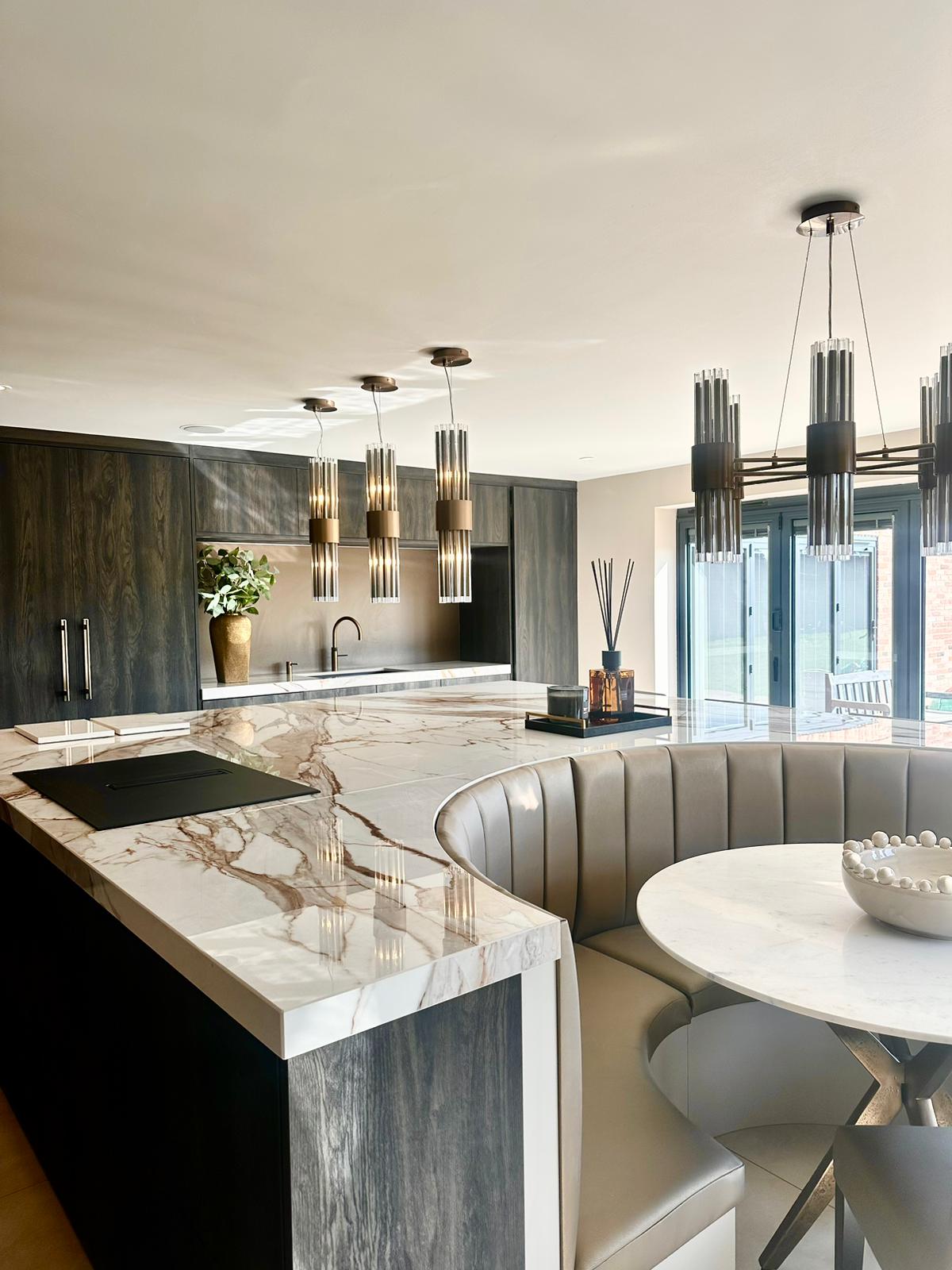
A luxury kitchen and bathroom go beyond aesthetics; they combine exceptional craftsmanship, premium materials, and sustainable innovation to create spaces that are both functional and visually stunning. Modern luxury is about blending sophistication with eco-conscious choices, ensuring that these spaces not only look exquisite but also contribute to a sustainable future. Below, we explore how sustainability is redefining luxury kitchen and bathroom design and the key benefits of integrating environmentally friendly materials.
The Benefits of Using Sustainable Materials in Kitchens
Sustainability has become a key consideration in high-end kitchen design, as homeowners seek materials that offer both beauty and environmental responsibility. Reclaimed wood, recycled glass worktops, and eco-friendly composite materials reduce waste and carbon footprint while maintaining a premium look. These materials often offer superior durability, reducing the need for replacements over time. Additionally, using low-VOC (volatile organic compound) paints and sealants improves indoor air quality, creating a healthier home environment. Sustainable materials not only contribute to a greener planet but also enhance the authenticity and character of a luxury kitchen.
How to Design an Eco-Friendly Bespoke Kitchen
A bespoke kitchen allows for complete customisation, making it easier to incorporate eco-friendly choices without compromising on luxury. Start with energy-efficient appliances that reduce electricity and water consumption, such as induction hobs and smart dishwashers. Sustainable cabinetry, crafted from responsibly sourced wood or bamboo, ensures durability while minimising environmental impact. For worktops, consider recycled quartz, natural stone, or composite materials that offer longevity and elegance. Maximising natural light with strategically placed windows and skylights reduces the need for artificial lighting, creating a bright and energy-efficient space.
Comparing Sustainable vs. Traditional Kitchen Materials
Traditional kitchen materials, such as granite and hardwood, have long been associated with luxury, but they often come at an environmental cost due to high energy consumption in extraction and processing. In contrast, sustainable alternatives like recycled glass, bamboo, and eco-resin worktops offer a more ethical yet equally high-end finish. Reclaimed wood provides the warmth and character of traditional timber, while FSC-certified (Forest Stewardship Council) wood ensures that new materials come from responsibly managed forests. Sustainable materials are not only more eco-conscious but often require less maintenance and have a longer lifespan, making them a smart investment for high-end kitchens.
How Sustainability Enhances the Long-Term Value of Kitchens
Investing in sustainability doesn’t just benefit the environment – it also enhances the long-term value of a kitchen. Eco-friendly kitchens appeal to buyers looking for energy-efficient homes, potentially increasing property resale value. High-quality sustainable materials, such as low-maintenance quartz and recycled stone, resist wear and tear better than some traditional options, reducing renovation costs in the long run. Additionally, smart home technology, such as water-saving taps and intelligent lighting, further adds to the home’s efficiency, making it more attractive to future buyers while lowering utility bills.
Examples of Environmentally Conscious Kitchen Designs
Many luxury kitchens showcase how sustainability and opulence can coexist beautifully. Minimalist Scandinavian-inspired kitchens use FSC-certified wood, neutral tones, and energy-efficient LED lighting to create a serene, eco-conscious space. In contrast, industrial-style kitchens incorporate reclaimed metal, recycled worktops, and repurposed wooden beams for a bold yet sustainable aesthetic. Some high-end homeowners have taken sustainability to the next level with fully off-grid kitchens, powered by solar panels and designed with water-recycling systems. These designs prove that luxury kitchens can be both environmentally responsible and effortlessly stylish.
Final Thoughts
A truly luxury kitchen and bathroom are not just defined by their aesthetic appeal but by their craftsmanship, longevity, and sustainability. By incorporating eco-friendly materials, energy-efficient appliances, and innovative technology, homeowners can enjoy a space that is both indulgent and environmentally responsible. With growing awareness of sustainable design, the future of luxury kitchens and bathrooms is one where beauty meets ethical responsibility, proving that high-end living and sustainability can go hand in hand.