
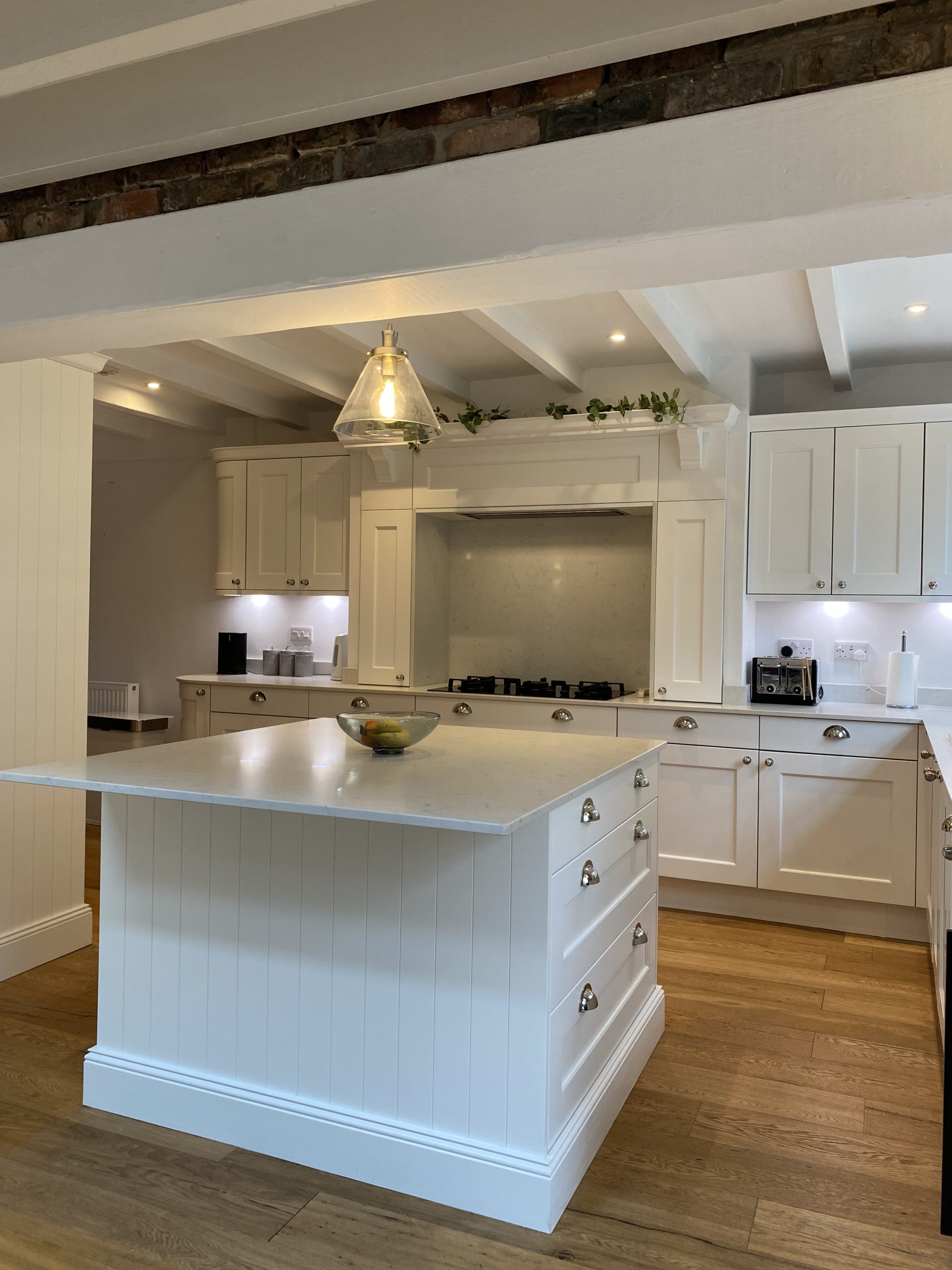
Lighting plays a crucial role in creating the perfect kitchen – affecting both its functionality and aesthetic appeal. The right lighting can transform a space, enhancing its ambience while ensuring key areas are well-lit for cooking and socialising. Whether you prefer sleek recessed lighting, statement pendants, or energy-efficient LEDs, understanding how to layer and position lights is key to achieving a beautifully lit kitchen. Below, we explore the impact of lighting on kitchen design and provide expert tips on making the most of your lighting choices.
The Impact of Lighting on Kitchen Design and Ambience
Lighting is more than just a practical necessity – it sets the mood and defines the overall look of your kitchen. A well-lit kitchen feels warm, inviting, and spacious, whereas poor lighting can make even the most beautifully designed space feel dull and uninviting. Bright, cool-toned lighting enhances a modern kitchen, while warmer tones create a cosy, intimate atmosphere. Strategic lighting placement can also highlight architectural details, illuminate workspaces, and create depth, making the kitchen feel larger and more dynamic.
Types of Kitchen Lighting and Their Uses
There are three primary types of kitchen lighting, each serving a different purpose:
- Ambient lighting provides overall illumination for the kitchen. It usually comes from ceiling-mounted fixtures, recessed lights, or chandeliers that distribute light evenly throughout the space.
- Task lighting focuses on specific areas where activities such as chopping, cooking, or reading recipes take place. Under-cabinet lights, pendant lights over islands, and directional spotlights are commonly used for this purpose.
- Accent lighting enhances the design of the kitchen, drawing attention to focal points such as statement splashbacks, open shelving, or decorative features. LED strips and in-cabinet lighting are excellent choices for adding depth and luxury to your space.
How to Layer Lighting for Maximum Effect in the Kitchen
To achieve a balanced and visually appealing kitchen, layering lighting is essential. Instead of relying on a single light source, combining ambient, task, and accent lighting ensures both functionality and style. Start with ambient lightingto provide general illumination, then add task lighting under cabinets or over worktops to eliminate shadows. Finally, incorporate accent lighting to highlight key design elements, such as glass-fronted cabinets or a statement worktop. Dimmer switches are also a great addition, allowing you to adjust the brightness depending on the time of day or mood you want to create.
Choosing Between LED, Pendant, and Recessed Lighting
Selecting the right type of lighting depends on your kitchen’s layout, style, and personal preference.
- LED lighting is a versatile and energy-efficient option that can be used for all three lighting layers. It provides long-lasting illumination while reducing electricity costs.
- Pendant lights are a popular choice for kitchen islands and dining areas, acting as both a functional light source and a design statement. They work well in contemporary and classic kitchens alike, with styles ranging from minimalist glass globes to vintage-inspired metal shades.
- Recessed lighting offers a sleek, unobtrusive look, ideal for modern and minimalist kitchens. These fixtures provide even illumination without taking up visual space, making them perfect for smaller kitchens or those with low ceilings.
Final Thoughts
Lighting is a fundamental element of kitchen design, influencing everything from functionality to ambience. By choosing the right combination of ambient, task, and accent lighting, you can enhance the practicality of your space while elevating its overall aesthetic. Whether you opt for energy-efficient LEDs, stylish pendant lights, or modern recessed lighting, the key is to create a layered effect that enhances the beauty and usability of your kitchen.